Correct fitting helps you use your crutches safely and effectively. When fitting crutches, stand up straight and wear the shoes you will normally use to walk. If the crutches don’t feel right, ask your healthcare provider, nurse, or physical therapist to check the fit.
Getting to know your crutches
Crutches are often used for injuries to the knee, ankle, foot, or hip. Using crutches needs good coordination, balance, and upper body strength. If you’re using only one crutch, keep it on the unaffected (uninjured) side unless told otherwise.
The crutches fit if:
-
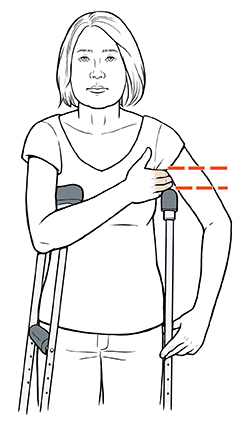
You can put 2 to 3 fingers between your armpit and the top of the axillary pad.
-
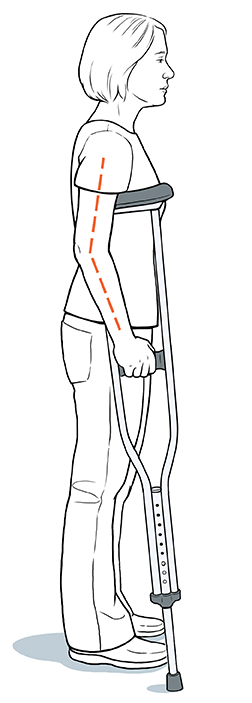
Your arms are slightly bent at the elbows when your hands are on the hand grips.
-
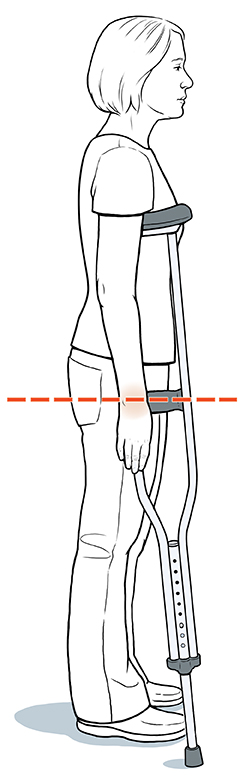
Your wrists are even with the hand grips when your arms hang at your sides.
Precautions
-
Crutches should have nonskid rubber tips to prevent slipping. Change tips that look worn.
-
Don’t let your armpits rest on the pads. This can cause tingling, numbness, and loss of muscle strength in your arm.
-
Don’t use crutches that are too short, too long, or mismatched. They can cause back pain and falls.
-
In wet weather, dry crutch tips when coming indoors.
Online Medical Reviewer: Daphne Pierce-Smith RN MSN
Online Medical Reviewer: Raymond Turley Jr PA-C
Online Medical Reviewer: Thomas N Joseph MD
Date Last Reviewed: 08/01/2024
© 2000-2026 The StayWell Company, LLC. All rights reserved. This information is not intended as a substitute for professional medical care. Always follow your healthcare professional's instructions.


