What is a trigger point?
A trigger point is a tight, painful knot of muscle fiber. It can form where a muscle is strained or injured. The knot can sometimes be felt under the skin. A trigger point is very tender to the touch. Pain may also spread to other parts of the affected muscle. Or you may have pain in another area of your body (referred pain). Muscles around a knee, shoulder blade, or other bones are prone to trigger points. This is because these muscles are more likely to be injured.
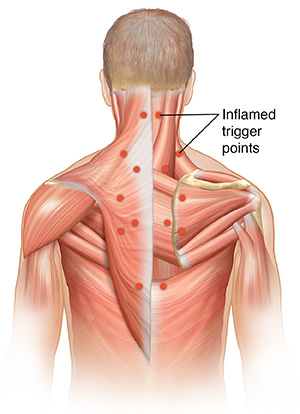
The cause of your muscle pain or spasms may be 1 or more trigger points. Your health care provider may decide to inject the painful spots to relax the muscle. This can help relieve your pain. Relaxing the muscle can also make movement easier. You may then be able to exercise to strengthen the muscle and help it heal.
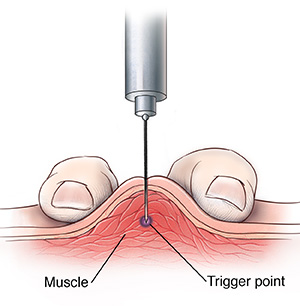
About the injections
Any muscle in the body can have 1 or more trigger points. Several injections may be needed in each trigger point to best ease pain. These injections may be given in sessions about 2 weeks apart. This depends on what your provider prefers. In some cases, you may not feel much change in your symptoms until after the third injection.
Risks and possible complications
Risks and complications are very rare, but may include:
-
Infection.
-
Bleeding.
-
Lung puncture (pneumothorax or collapsed lung).
-
Nerve damage.
-
Allergic reaction.
Online Medical Reviewer: Marianne Fraser MSN RN
Online Medical Reviewer: Michelle Johnson BSN RN AMB-BC
Online Medical Reviewer: Rita Sather RN
Date Last Reviewed: 03/01/2025
© 2000-2026 The StayWell Company, LLC. All rights reserved. This information is not intended as a substitute for professional medical care. Always follow your healthcare professional's instructions.


