Pressure injuries (also called pressure ulcers, pressure sores, or bedsores) happen when pressure on your skin cuts off your blood supply. This usually happens in areas where your bones are closer to the surface. This makes your skin and the tissue below your skin break down. Pressure injuries often happen if you lie or sit in one position for too long. They can be painful and heal slowly. But you can do many things to help prevent this.
Who’s at risk
Anyone who can’t move around on their own is at risk for pressure injuries. The biggest risk factors are:
-
Staying in a bed or wheelchair for long periods of time
-
Not being able to change positions without help from someone else
Other risk factors include:
-
Skin irritation from loss of bladder or bowel control
-
Poor nutrition
-
Blood vessel disease
-
Loss of feeling in the skin
-
Smoking
-
Diabetes
-
Being older than 65 years of age
-
Local infection
-
Dementia
Your role
Your role is to prevent pressure injuries from forming. That means you need to:
-
Change positions often.
-
Limit the time you spend sitting or lying in one position.
-
Get up and move around or walk as much as possible.
-
Support your body with cushions or pillows.
-
Don't rub or slide when you move in bed or in a chair.
-
Keep your skin clean and dry.
-
Wear clothing that fits. Don't wear clothing that is loose and bunches up under you or that is too tight.
-
Eat a healthy diet.
-
Check your skin twice a day for signs of changes.
-
Manage your diabetes and other health conditions that make you more likely to have a pressure injury.
Where pressure injuries occur
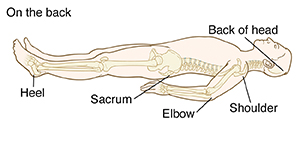
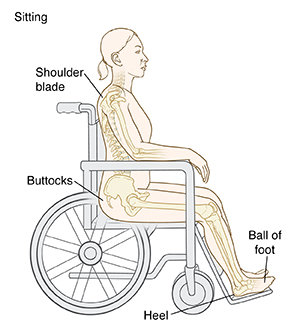
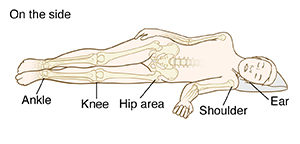
Pressure injuries form where bone presses your skin against something such as a bed or chair. This is most likely to happen in places where there is not much padding between the skin and the bone. For example, your head, feet, and around joints such as your shoulder, hip, and knee.
When to call your doctor
Call your doctor when you first see any sign of:
-
Redness that doesn’t go away after the pressure source is removed
-
Cracked, blistered, or broken skin
-
Red, shiny skin that is painful or warm to the touch, or that feels spongy or hard
-
Skin that has lost feeling (sensation)
-
A darker area of skin
-
Any wound that drains or that has a bad odor



