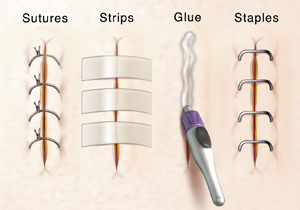
You have a break in the skin. This wound may be because of an injury. Or it may be the result of surgery. Closing the wound helps stop bleeding, protects the wound from infection, and speeds healing. The type of closure that is used depends on the size and location of the wound. Choices include stitches (sutures), strips of surgical tape, skin glue, or staples.
Home care
Your health care provider may prescribe medicines for pain. Or they may suggest an over-the-counter (OTC) pain reliever, such as ibuprofen, naproxen, or acetaminophen. If you have chronic kidney disease, liver problems, or take any medicines, talk with your provider before taking any OTC medicines. Also talk with your provider if you've had a stomach ulcer or gastrointestinal bleeding. In certain cases, antibiotics may be prescribed to help prevent infection. If antibiotics are prescribed, take them exactly as directed for as long as directed. Don't stop taking your antibiotics until they are all gone, even if you feel better.
General care
-
Follow the provider’s instructions on how to care for the wound.
-
Wash your hands with soap and clean, running water before and after caring for the wound. This helps prevent infection. If you have disposable plastic gloves, wear those to care for your wound. Then dispose of them correctly.
-
If a bandage was applied, change it once a day or as directed. If at any time the bandage becomes wet or dirty, replace it with a new one. If the wound is wet, gently pat it dry with a clean cloth before putting on a new bandage.
-
Unless told otherwise, don't soak the wound in water. Take showers or sponge baths instead of tub baths. Don't scrub or pick at the wound.
-
Don't go swimming, or put the wound under water.
-
Don't scratch, rub, or pick at the area.
-
Watch for the signs of infection listed below. Any wound can get infected, even if you are taking antibiotics. Seek care right away if you see any possible signs of infection.
Care for specific closures
-
Stitches. Your provider may instruct you to clean the wound daily after the first 2 to 3 days. To do this, remove the bandage and gently wash the area with soap and clean, running water. After cleaning, apply a thin layer of antibiotic ointment if recommended. Then apply a new bandage. Two types of stitches may be used: absorbable and nonabsorbable. Ask your provider what type of stitches were used. Ask if you need to return for a follow-up visit. Nonabsorbable stitches need to be removed by your provider.
-
Surgical tape. Keep the area dry. If it gets wet, blot it dry with a clean towel. Surgical tape closures usually fall off within 7 to 10 days. If they have not fallen off after 10 days, you can remove them yourself. To remove the tape, moisten it with clean, running water. Gently pull it from each end to the middle. Then roll it sideways so as to not pull the wound open again. If the adhesive sticks too much, you can use mineral oil or petroleum jelly on a cotton ball to gently rub the adhesive. Always check with your provider before you remove any closure device.
-
Skin glue. You may shower as usual, but don't use soaps, lotions, or ointments on the wound area. Don't scrub the wound or soak it for 7 to 10 days. After bathing, pat the wound dry with a soft towel. Don't apply liquids like peroxide, ointments, or creams to the wound while the glue is in place. Don't scratch, rub, or pick at the glue. Don't put tape directly over the glue. The glue will fall off on its own in 5 to 10 days. If it does not easily peel off after 10 days, gently rub petroleum jelly or an ointment onto the glue until it loosens.
-
Staples. Take showers or sponge baths. Don't take tub baths. Don't use lotions on the wound area. The area may be cleaned with soap and water 2 to 3 days after the wound was stapled. Don't scrub the wound. Pat it dry with a clean soft cloth or towel. You can use antibiotic ointment if your provider tells you to. Staples will need to be removed by your provider in 10 to 14 days.
Follow-up care
Follow up with your health care provider, or as directed. If you have nonabsorbable stitches or staples, return for their removal as directed.
When to get medical advice
Contact your health care provider right away if you have any of these signs of infection:
-
Fever of 100.4°F (38°C) or higher, or as directed by your provider
-
Increasing pain in the wound
-
Increasing redness or swelling
-
Pus or bad-smelling drainage from the wound
Also contact your provider right away if:
-
Your wound bleeds more than a small amount or won’t stop bleeding.
-
The edges of the wound come apart.
-
Numbness or weakness occurs in the wound area and doesn’t go away.



