Actinic keratosis is a common skin growth caused by ultraviolet (UV) rays, most often from many years of sun exposure.These growths are not cancer, but they may turn into skin cancer (precancerous) if they are not treated.
What causes actinic keratosis?
Sun exposure causes most actinic keratoses. UV light exposure from tanning beds and welding equipment can also cause these growths.
People who easily sunburn are more likely to develop actinic keratosis. The growths often appear later in life after many years of sun exposure.
What are the symptoms of actinic keratosis?
Actinic keratosis may be:
-
Rough, like sandpaper.
-
Wartlike.
-
Scaly or scabby.
-
More easily felt than seen.
Growths usually appear on skin that is most often exposed to the sun, such as the face, ears, or backs of the hands. They may appear alone or in clusters. They may start out as reddish patches. The skin around them may be discolored.
Actinic keratoses usually are not painful. Sometimes they may make the skin feel tender.
How is actinic keratosis treated?
Your doctor may want to remove or destroy actinic keratoses to prevent them from turning into skin cancer. You may also wish to have them removed if they bother you. They can be removed in several ways:
-
By using a medicine on the skin.
-
By freezing the growths off with liquid nitrogen.
-
By removing them with a scalpel. This makes it possible to have the tissue tested (biopsy), if needed.
-
By treating the area with photodynamic therapy. A medicine is put on the skin to make it sensitive to light. The medicine is then activated with a special medical light, a laser, or carefully controlled sunlight.
-
By using a chemical peel or laser to destroy the growths.
How can you prevent actinic keratosis?
Preventing sun damage to your skin is the best way to prevent this problem. Here are some ways to protect your skin:
-
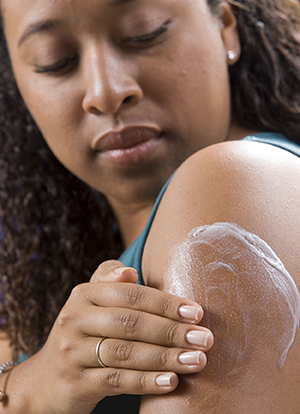
Use sunscreen with an SPF of 30 or higher on exposed skin when you are outside.
-
Wear a hat to protect your face and scalp. Consider wearing clothing that covers your arms and legs.
-
Stay out of the sun in the middle of the day, when sunlight is most direct.
-
Be aware of how long you have been out in the sun. Reapply sunscreen according to package directions.
-
Don't use tanning beds.
What are possible complications of actinic keratosis?
Actinic keratosis is a sign of skin damage. It may become cancerous. It’s a good idea to ask your doctor to check new skin growths.
When should you contact your doctor?
Contact your doctor right away if any of these occur:
-
An actinic keratosis does not respond to treatment.
-
An actinic keratosis does not heal within a few weeks of treatment.
-
The growth seems to heal after treatment but then comes back.
-
You have a skin growth that is changing in size, shape, or color.
-
You have a skin growth that looks different on one side from the other.
-
You have a skin growth that is not the same color throughout.
Author: Freed, Becca
Online Medical Reviewer: Daphne Pierce-Smith RN MSN
Online Medical Reviewer: Michael Lehrer MD
Online Medical Reviewer: Rita Sather RN
Date Last Reviewed: 06/01/2025
© 2000-2026 The StayWell Company, LLC. All rights reserved. This information is not intended as a substitute for professional medical care. Always follow your healthcare professional's instructions.


