Lichen sclerosus is a long-term (chronic) skin condition. It causes white patches to form on the body. These most often affect skin around the genitals and anus. But they can appear anywhere, even in the mouth. The condition is more common in women who have gone through menopause and young girls who haven't gone through puberty. It also tends to occur in men who aren't circumcised. This disorder is not contagious. It's not a sexually transmitted infection.
How to say it
LY-ken skluh-ROH-sus
What causes lichen sclerosus?
Experts don’t yet know exactly what causes lichen sclerosus. It may be an autoimmune disease, which means that the immune system attacks healthy parts of the body, such as the skin. It may also be linked to genetics, hormones, or some infections.
Symptoms of lichen sclerosus
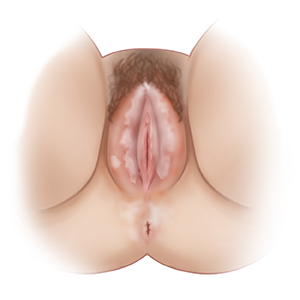
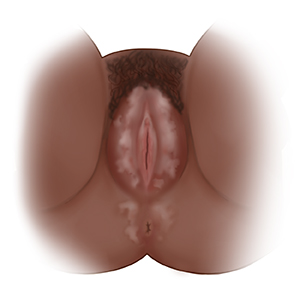
Lichen sclerosus causes white patches on the skin. These patches break down the skin. The skin may become thin, wrinkled, and cracked. The patches may scar, discolor, and disfigure the skin. These changes can damage the skin. In most cases, the patches appear around the vagina and on the penis. Genital lesions can be very itchy or sometimes painful.
Itching is the main symptom, and it's often worse at night. Other symptoms include a burning feeling around the patches, pain, and painful defecation. Skin breakdown or scarring may lead to problems having sex and using the bathroom. In some cases, the patches are found on the back, shoulders, neck, wrist, thigh, and breast areas. They may also appear on the lips or in the mouth.
Treatment for lichen sclerosus
Treatment can ease symptoms and prevent scarring. It should be started early to prevent lasting (permanent) damage to the skin. Care from a health care provider who specializes in lichen sclerosis is recommended. Be sure to follow up with monitoring and treatment as advised. Treatment choices include:
-
Skin care. Bathing with mild soaps and using moisturizing cream may ease itching.
-
Steroids. These medicines are often put on the skin as an ointment or cream. Very strong, prescription steroid creams are used. Your provider may also inject steroid medicine into the white patches in severe cases.
-
Other medicines. An oral medicine (antihistamine) may be given to ease itching. Other creams or ointments are also available if a steroid doesn’t work.
-
Phototherapy. This treatment directs ultraviolet light on the skin to help clear it.
-
Surgery. This treatment helps with scarring and skin disfigurement. Men may benefit from circumcision if they haven’t yet had it done.
Possible complications of lichen sclerosus
-
Skin cancer of the genitals
-
Trouble using the bathroom or having intercourse
-
Scar formation
For more information
For more help with managing this chronic skin condition, go to:
-
American Academy of Dermatology Association www.aad.org/public
-
National Organization for Rare Disorders www.rarediseases.org
-
National Institute of Arthritis and Musculoskeletal and Skin Diseases www.niams.nih.gov
Author: Semko, Laura
Online Medical Reviewer: Daphne Pierce-Smith RN MSN
Online Medical Reviewer: Rita Sather RN
Online Medical Reviewer: Vinita Wadhawan Researcher
Date Last Reviewed: 03/01/2025
© 2000-2026 The StayWell Company, LLC. All rights reserved. This information is not intended as a substitute for professional medical care. Always follow your healthcare professional's instructions.


