A seborrheic keratosis is a common skin growth that looks like a wart. These growths are considered harmless and aren't cancerous. They aren't contagious, and they don't spread from one person to another. Most people get these growths when they are middle-aged or older. They can occur almost anywhere on the body.
How to say it
seh-bor-EE-ihk ker-ah-TOH-sis
What causes seborrheic keratoses?
Experts don't know what causes seborrheic keratoses. They may run in families. Some studies suggest that they are more common in those exposed to a lot of sun. They are more common as people get older.
What are the symptoms of seborrheic keratoses?
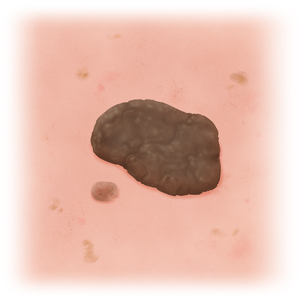
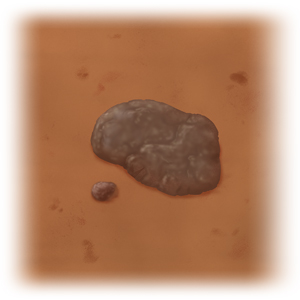
Here is what seborrheic keratoses often look like:
-
They tend to be round or oval in shape. They can be very small or about as big across as a quarter.
-
They can appear singly or in clusters.
-
They tend to be tan, brown, yellow, grey, or black in color.
-
The edges may be scalloped or uneven looking.
-
They can have a waxy or scaly look.
-
They can be a bit raised, looking like they're stuck on the skin.
-
They are slow-growing. Sudden, rapid growth or a change in size can sometimes occur.
-
They may get painful, red, and irritated if scratched or rubbed by abrasive clothing.
Seborrheic keratoses aren't painful, but they may itch. They can become irritated if they are constantly rubbed by skin or clothing. They most often appear on the face, arms, chest, back, and belly.
How are seborrheic keratoses treated?
Seborrheic keratoses don’t need to be treated unless they bother you. You may want them removed because you don't like how they look. You may also want them removed because they get irritated and uncomfortable. Sometimes seborrheic keratoses can look like more dangerous skin lesions. Your doctor might do a biopsy and remove any suspicious, bleeding, rapidly growing, or changing lesions because they are more likely to be cancer. A doctor can remove them during an office visit. Seborrheic keratoses can be removed by:
-
Freezing them off with liquid nitrogen.
-
Cutting them off with a scalpel.
-
Using an electric current to destroy the growth.
-
Using an FDA-approved topical hydrogen peroxide solution.
What are possible complications of seborrheic keratoses?
Seborrheic keratoses aren't cancer, but they can look like some types of skin cancer. So it’s a good idea to ask your doctor to check any new skin growths. Ask your doctor about any skin problem that concerns you.
When should I call my doctor?
Contact your doctor right away if:
-
You develop a lot of seborrheic keratoses very quickly.
-
Your seborrheic keratoses have rapid changes in size.
-
You have a sore that doesn't heal in a few weeks, or it heals and then comes back.
-
You have a mole or skin growth that is changing in size, shape, or color.
-
You have a mole or skin growth that looks different on one side from the other.
-
You have a mole or skin growth that isn't the same color throughout.
-
You have a mole or skin growth that bleeds.
Author: Freed, Becca
Online Medical Reviewer: Daphne Pierce-Smith RN MSN
Online Medical Reviewer: Rita Sather RN
Online Medical Reviewer: Vinita Wadhawan Researcher
Date Last Reviewed: 05/01/2025
© 2000-2026 The StayWell Company, LLC. All rights reserved. This information is not intended as a substitute for professional medical care. Always follow your healthcare professional's instructions.


