Your child is having surgery. Surgery takes place in an operating room in a hospital or a surgery center. Help your child get ready by learning more about the operating room staff and the kind of equipment they might see. Knowing what to expect can help you and your child feel more comfortable about surgery.
Who are the operating room staff?
Members of your child’s surgery team include the following people:
-
Surgeon. This is the healthcare provider who does the surgery.
-
Anesthesiologist. This is the healthcare provider trained to give anesthesia. There are several types of anesthesia. General anesthesia is most often used for major surgery. It causes your child to fall asleep and not feel pain during surgery.
-
Nurse anesthetist or anesthesia assistant. This staff person helps the anesthesiologist and is also trained to give anesthesia. An anesthesia resident (trainee) may also help with your child's care.
-
Nurses. They take care of your child and help the surgeon with various tasks.
What do the operating staff wear?
-
The operating staff wear clothing called scrubs.
-
During surgery, operating staff wear masks over their mouths and noses, and hats on their heads. They also wear surgical gloves on their hands. This helps keep everything clean and sterile.
What is inside the operating room?
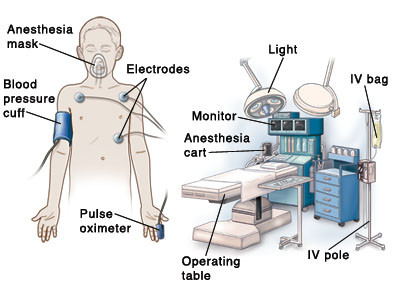
Your child may see this equipment in the operating room:
-
Operating table. Your child will lie on an operating table during surgery. This is a narrow bed that can be raised or lowered. A strap may also be used to help keep your child safely on the operating table.
-
Bright lights. These lights over the operating table help operating staff get a clear view during surgery.
-
Anesthesia cart. This holds equipment that the anesthesiologist or nurse anesthetist uses during surgery.
-
Monitors. These help keep track of your child’s vital signs, such as blood pressure, heart rate, and breathing.
-
Electrodes (sticky pads or stickers). These are placed on your child’s body to keep track of your child’s heart rate.
-
Pulse oximeter. This measures the oxygen level in your child’s blood. It may look like a bandage or a soft clip. It is placed around a finger or toe and has a small red light. It is painless.
-
Blood pressure cuff. This is wrapped around your child’s arm or leg. It is connected to a blood pressure machine. This machine checks your child’s blood pressure every few minutes during surgery.
-
IV (intravenous) line. This is a thin, flexible tube placed in a vein. It is used to deliver fluids and medicine to your child during surgery. The fluids flow through an IV from a bag that hangs on an IV pole.
Featured in



