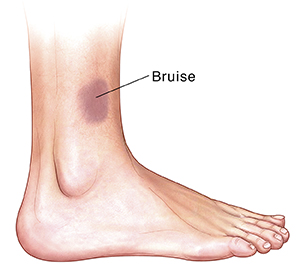
A bruise (contusion) happens when a blow to your body doesn't break the skin but does break blood vessels beneath the skin. Blood leaking from the broken vessels causes redness and swelling. As it heals, your bruise is likely to turn colors like purple, green, and yellow. This is normal. The bruise should fade in 2 or 3 weeks. A hard blow to your body could also cause some damage to your muscles and connective tissues. This is common in athletes and can cause more pain and swelling.
Things that make you more likely to bruise
Almost everyone bruises now and then. Certain people do bruise more easily than others. You're more prone to bruising as you get older. That's because blood vessels become more fragile with age. You're also more likely to bruise if you have a clotting disorder, such as hemophilia, or take medicines that reduce clotting, such as aspirin, nonsteroidal anti-inflammatory drugs, and blood-thinning medicines. You are also more likely to bruise if you have liver disease or drink alcohol daily.
When to go to the emergency room (ER)
Bruises almost always heal on their own without special treatment. But for some people, a bad bruise can be serious. Get medical care if you:
-
Have a clotting disorder, such as hemophilia.
-
Have cirrhosis or other serious liver disease.
-
Take blood-thinning medicines, such as heparin or warfarin. Sometimes your drug levels are elevated, and your dosages may need to be reduced.
-
Have severe or constant bruising even if you did not bump into anything or injure yourself. This may be the sign of an undiagnosed clotting problem.
What to expect in the ER
A health care provider will examine your bruise and ask about any health conditions you have. In some cases, you may have a test to check how well your blood clots. Other treatment will depend on your needs.
Follow-up care
Sometimes a bruise gets worse instead of better. It may become larger and more swollen. This can occur when your body walls off a small pool of blood under the skin (hematoma). In very rare cases, your health care provider may need to drain extra blood from the area.
Tip
Apply an ice pack or bag of frozen peas to a bruise for 15 to 20 minutes several times a day. Keep a thin cloth between the ice or frozen peas and your skin. The cold can help reduce redness and swelling.
Online Medical Reviewer: Chris Southard RN
Online Medical Reviewer: Eric Perez MD
Online Medical Reviewer: Marianne Fraser MSN RN
Date Last Reviewed: 01/01/2025
© 2000-2026 The StayWell Company, LLC. All rights reserved. This information is not intended as a substitute for professional medical care. Always follow your healthcare professional's instructions.


