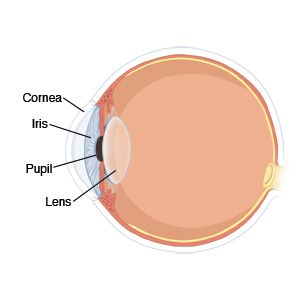
A subconjunctival hemorrhage is a result of a broken blood vessel on the white part of the eye. It is usually painless. It may be caused by coughing, sneezing, or vomiting. An injury to the eye can cause this condition, too. It can also be a sign of high blood pressure (hypertension) or a bleeding disorder.
This eye problem can look scary. But the presence of the blood is usually not serious. It will be reabsorbed without treatment within a few days to a few weeks.
Home care
You may continue your usual activities.
Follow-up care
Follow up with your healthcare provider, or as advised.
When to seek medical advice
Call your healthcare provider or seek medical care right away if any of these occur:
-
Pain in the eye
-
Change in vision
-
The blood does not go away within 3 weeks
-
Increasing redness or swelling of the eye
-
Severe headache or dizziness
-
Signs of bruising or bleeding from other parts of your body
Online Medical Reviewer: Chris Haupert MD
Online Medical Reviewer: L Renee Watson MSN RN
Online Medical Reviewer: Rita Sather RN
Date Last Reviewed: 09/01/2025
© 2000-2026 The StayWell Company, LLC. All rights reserved. This information is not intended as a substitute for professional medical care. Always follow your healthcare professional's instructions.


