Your doctor will teach you how to care for your catheter and exit site. Proper cleanliness and care are important to prevent infection. If an infection occurs, the catheter may have to be taken out. A new one will have to be put in at a later date.
During healing
Your skin will heal in 1 or 2 weeks. During this time, follow your doctor's instructions. Don't get your catheter or exit site wet until your doctor says you can.
After healing
- Check your access site every day. If you see redness, swelling, pus, unusual drainage, or if the site is painful, contact your doctor immediately.
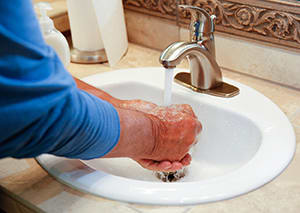
- Always scrub your hands for 20 seconds before and after touching your catheter.
- Keep your catheter clean and covered.
- Anchor or secure the catheter as instructed. Don't let clothes or things you carry rub or pull at it.
- Always do exchanges in a clean place.
- Never use a cloudy or leaking bag of dialysate.
- Wear a mask while doing exchanges.
- Don't swim in lakes, streams, rivers, or public pools. Also don't soak in baths or hot tubs. It's okay to go into the ocean or a chlorinated private pool. The catheter and exit site should be covered with a clear, waterproof dressing or colostomy bag. Routine exit site care should be done after swimming.
- Make sure all caretakers and health care providers clean their hands before and after caring for you or your catheter access and exit site. They should wash their hands with soap and water. Or they can use an alcohol-based hand sanitizer.
- Wear a medic alert bracelet or necklace to alert health care providers about the dialysis access. The bracelet can identify the type and location of the vascular access and that you are on dialysis.
When to contact your doctor
Contact your doctor if you have any of these problems:
- Bleeding or draining from the exit site
- Red, painful, or warm skin around the catheter
- Fever of
100.4°F (38°C ) or higher, or as advised by your doctor - Pain in your belly (abdomen)
- Cloudy or bloody dialysate when it drains from your belly
- Incomplete draining of dialysate
Important numbers
Write the names and numbers of your health care providers below. Or program them into your cell phone. You need to know how to get in touch with them. Share this information with close family members or friends. Make sure you know how to reach them even after hours and on weekends and holidays.
Doctor:
Name ___________________ Phone ___________________
Surgeon:
Name ___________________ Phone ___________________
Dialysis Center:
Name ___________________ Phone ___________________
How daily issues affect your health
Many things in your daily life impact your health. This can include transportation, money problems, housing, access to food, and child care. If you can't get to medical appointments, you may not receive the care you need. When money is tight, it may be difficult to pay for medicines. And living far from a grocery store can make it hard to buy healthy food.
If you have concerns in any of these or other areas, talk with your health care team. They may know of local resources to assist you. Or they may have a staff person who can help.
Online Medical Reviewer: Raymond Kent Turley BSN MSN RN
Online Medical Reviewer: Rita Sather RN
Online Medical Reviewer: Walead Latif MD
Date Last Reviewed: 09/01/2025
© 2000-2026 The StayWell Company, LLC. All rights reserved. This information is not intended as a substitute for professional medical care. Always follow your healthcare professional's instructions.


