A cystocele is when a person’s bladder sags down into the vagina. It does this when the wall of tissue between the bladder and the vagina gets weak. It’s also called a prolapsed bladder. The sagging bladder can stretch the opening of the urethra. This is the tube that carries urine out of the body. This can cause urine to leak when you cough, sneeze, or lift something heavy. A cystocele can also cause discomfort in the pelvis and make it hard to fully empty your bladder. The risk of cystocele is greater for people who have had vaginal deliveries.
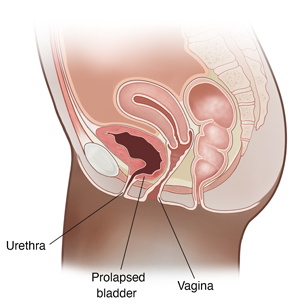
Causes of a cystocele
A cystocele may be caused by:
-
Heavy lifting.
-
Straining muscles during childbirth.
-
Chronic constipation.
-
Repeated straining during bowel movements or with coughing.
-
Weak muscles around the vagina caused by lack of estrogen after menopause.
-
Obesity.
-
Aging.
-
Previous pelvic surgery.
Symptoms of a cystocele
Symptoms of a cystocele include:
-
Leakage of urine when you cough, sneeze, or lift something heavy.
-
Heavy, achy, or full feeling in the pelvis.
-
Pelvic pressure that gets worse with standing, lifting, or coughing.
-
A bulge in the vagina that you can feel.
-
Lower back pain.
-
Sexual difficulties.
-
Problems with inserting tampons.
-
Frequent urination or the urge to pass urine.
-
Incomplete emptying of the bladder.
-
Trouble starting a stream of urine.
Diagnosis of a cystocele
Your doctor will ask about your health history and give you a physical exam. Diagnosis may include looking in your bladder with a camera (cystoscopy), bladder function testing (urodynamics), X-rays, ultrasound, and MRI.
A cystocele is graded during diagnosis. Grade 1 means the bladder sags only a short way into the top of the vagina. Grade 2 means the bladder sags down to the lower opening of the vagina. Grade 3 means the bladder sags out of the lower opening of the vagina.
Treatment of a cystocele
Treatment depends on the grade of your cystocele and other factors. Your choices may include:
-
Change of activity. You may need to not do certain activities, such as heavy lifting or straining. These can cause your cystocele to get worse.
-
Pelvic floor exercises. These strengthen the muscles that support the bladder, uterus, and rectum.
-
Pessary. This is a device put in the vagina to hold the bladder in place.
-
Surgery. A procedure can be done to move the bladder back into a more normal position and hold it in place.
Author: Wheeler, Brooke
Online Medical Reviewer: Donna Freeborn PhD CNM FNP
Online Medical Reviewer: Heather M Trevino BSN RNC
Online Medical Reviewer: Irina Burd MD PhD
Date Last Reviewed: 07/01/2025
© 2000-2026 The StayWell Company, LLC. All rights reserved. This information is not intended as a substitute for professional medical care. Always follow your healthcare professional's instructions.


