A lifetime of fitness offers a lot of benefits. Fitness can:
-
Reduce your risk of health problems, such as heart disease and high blood pressure. They also include diabetes and some types of cancer.
-
Manage your weight.
-
Help you sleep better.
-
Prevent or ease stress and depression.
-
Boost your energy.
You need to keep exercising to keep these benefits. Your main goal is to make fitness a lifetime commitment. Here are some tips:
-
Build a fitness plan that you can stick with.
-
Choose activities you like.
-
Go slowly, especially when just starting out.
-
Work up to being active 30 minutes on most days.
Medium and high intensity physical activity
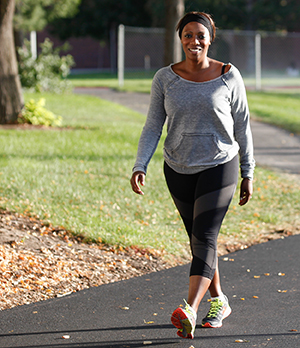
Aim for a total of 150 or more minutes a week of medium-intensity aerobic physical activity. Or try for 75 minutes or more of high-intensity aerobic activity a week. Or do an equal mix of both.
-
Medium-intensity activity. This means your heart is beating faster. And you can talk while you exercise. Examples are dancing, gardening, and brisk walking.
-
High-intensity activity. This means your heart is beating faster. And it's hard to talk in full sentences while you exercise. Examples may include running, swimming laps, and hiking uphill.
Try to spread out your activity during the week. And do muscle strengthening activities 2 days a week. Do these at a medium or harder intensity.
Some benefits from fitness
People who are fit:
-
Are more alert and productive.
-
Have more energy, both physically and mentally.
-
Handle stress better.
-
Sleep better.
-
Have better overall health.
-
Are less likely to get injured.
Check your health first
It's a good idea to talk with your doctor before you start a new exercise program. This is especially important if you answer yes to any of the questions below:
-
Do you have a chronic health problem? Examples are heart disease, diabetes, and osteoarthritis.
-
Do you ever have chest pains?
-
Do you ever feel faint or have dizzy spells?
-
Has a doctor ever said your blood pressure is too high?
-
Do you have any joint pain?
-
Do you take any prescription medicines?
Will you lose weight?
Many of us would like to lose or keep off a few pounds. Being more active each day and building muscle can help. Here’s how:
-
Being active burns calories. You burn nearly twice as many calories just walking slowly as you do by sitting.
-
Muscle burns more calories than fat. The more muscle you build up, the more calories you burn.
-
If you add more muscle, you’ll use more calories even when you’re not being active.
-
Being active helps you keep more muscle as you age. More muscle means it will be easier to control your weight.
Online Medical Reviewer: Elizabeth Oswald PT DPT
Online Medical Reviewer: L Renee Watson MSN RN
Online Medical Reviewer: Stacey Wojcik MBA BSN RN
Date Last Reviewed: 05/01/2025
© 2000-2026 The StayWell Company, LLC. All rights reserved. This information is not intended as a substitute for professional medical care. Always follow your healthcare professional's instructions.


