Healthy eating is important if you have COPD (chronic obstructive pulmonary disease). Choose healthy foods when eating meals at home or dining out. Food fuels the body. The right mix of nutrients in your diet can help you breathe easier, too. They give energy to the muscles that help you breathe. You also need nutrients to fight off infections and stay at a healthy weight.
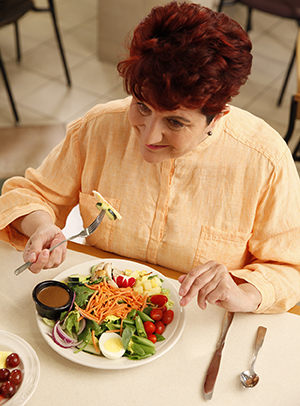
Small meals are less likely to cause shortness of breath. Talk with your doctor or a registered dietitian for help in making meal plans to meet your needs. Tell your providers about other health problems you have that may affect your diet.
Here are some tips for making meals easier:
-
Rest before meals or dining out.
-
Eat meals early in the morning if you feel too tired to eat later in the day.
-
Eat 4 to 6 small meals instead of 3 large ones. Small meals help your lungs fill in and empty out with air more easily. They also help your diaphragm move freely, making it easier to breathe.
-
Choose foods that are easy to prepare and don't take much time to make. Ask someone to help you with preparing meals so you won't be too tired to eat. Ask your health care team about meal delivery services in your area.
-
Limit how much fluid you have during meals if drinking liquids makes you feel too full to eat. You can drink fluids an hour after a meal.
-
Limit foods that give you gas. Gas or bloating can make breathing harder.
-
Eat fewer carbohydrates and more healthy fats. This may help you breathe easier. Carbohydrates make more carbon dioxide than fats when your body digests them. Eggs, fish, lean meat, and nuts are good choices.
-
Limit how much table sugar, candy, cake, soft drinks, and other simple carbohydrates you eat.
-
Limit foods with trans fats and saturated fats. Examples are butter, lard, fried foods, cookies, crackers, pastries, hydrogenated vegetable oils, shortening, and fat and skin from meats.
-
Choose monounsaturated and polyunsaturated fats such as canola, safflower, and corn oils. They don't have cholesterol.
-
Choose a good source of protein. Examples are chicken, fish, cheese, lean meat, milk, eggs, poultry, nuts, and beans or peas. Eat protein at least twice a day for healthy muscles.
-
Try to eat 20 to 30 grams of fiber every day. Whole grain bread and pasta, nuts, seeds, beans, fruits, and vegetables are good sources of fiber. Ask your doctor about how much fiber you should eat each day.
-
If you're trying to gain weight, eat fresh fruits, vegetables, and a variety of whole grains. Also choose protein with a higher fat content, such as yogurt, whole milk, and whole milk cheese.
-
If you're trying to lose weight, eat fresh fruits and vegetables instead of bread and pasta for most of your complex carbohydrates. Also choose low-fat protein, such as lean meats and low-fat dairy products.
-
Ask your doctor how much salt (sodium) you should have each day. Too much sodium makes your body hold onto fluids. This makes breathing harder. It may also raise your blood pressure.
-
Keep hydrated. Drink 48 to 64 ounces of water over the course of the day, unless advised otherwise. Ask your doctor about how much fluid you should drink each day.
-
Ask your doctor if you should take any vitamins, minerals, or nutritional supplements.
For more information on healthy meal planning, visit the Academy of Nutrition and Dietetics (www.eatright.org).
Date Last Reviewed: 06/01/2025
© 2000-2026 The StayWell Company, LLC. All rights reserved. This information is not intended as a substitute for professional medical care. Always follow your healthcare professional's instructions.


