What is the nervous system?
The nervous system is a complex system that controls and coordinates body activities. It's made up of two main divisions:
- Central nervous system. This consists of the brain and spinal cord.
- Peripheral nervous system. This consists of the peripheral nerves and muscles.
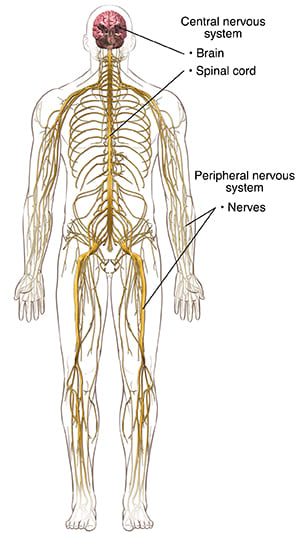
The main organs of the nervous system include:
- Brain
- Spinal cord
- Eyes
- Ears
- Sensory organs of taste
- Sensory organs of smell
- Sensory receptors located in the skin, joints, muscles, and other parts of the body
- Nerves going to muscles or organs
- Muscles
What are some disorders of the nervous system?
The nervous system can be affected by various disorders. It can be damaged by:
- Injury.
- Infections.
- Degeneration.
- Structural defects.
- Tumors.
- Blood flow disruption.
- Autoimmune disorders.
Disorders of the nervous system
Disorders of the nervous system may include:
- Vascular disorders, such as stroke, transient ischemic attack (TIA), subarachnoid hemorrhage, subdural hemorrhage and hematoma, and extradural hemorrhage.
- Infections, such as meningitis, encephalitis, myelitis, and epidural abscess.
- Structural disorders, such as brain or spinal cord injury, cervical spondylosis, carpal tunnel syndrome, and brain or spinal cord tumors.
- Seizure disorders, such as epilepsy.
- Degeneration, such as Parkinson disease, amyotrophic lateral sclerosis (ALS), Huntington chorea, and Alzheimer disease.
- Autoimmune or inflammatory disorders, such as Bell palsy, multiple sclerosis, peripheral neuropathy, and Guillain-Barré syndrome.
- Mental health disorders, such as mood disorders, depression, and schizophrenia.
Symptoms of nervous system disorders
These are the most common symptoms of a nervous system disorder. But each person may have slightly different symptoms. Symptoms may include:
- Persistent or sudden onset of a headache.
- A headache that changes or is different.
- Loss of feeling or tingling.
- Weakness or loss of muscle strength.
- Loss of sight or double vision.
- Memory loss.
- Impaired mental ability.
- Lack of coordination.
- Muscle rigidity.
- Tremors and seizures.
- Back pain that spreads to the feet, toes, or other parts of the body.
- Muscle wasting and slurred speech.
- New language impairment (expression or comprehension).
The symptoms of a nervous system disorder may look like other medical conditions or problems. Always see your doctor for a diagnosis.
Health care providers who treat nervous system disorders
The best way to manage nervous system disorders is with the help of a team of health care providers. You may not need all members of the team at any given time. But it's good to know who they are and how they can help. Here is a list of some of the health care providers that may be involved in treating nervous system disorders:
- Neurologist. The doctors who diagnose and treat nervous system disorders are called neurologists. Some neurologists treat acute strokes and cerebral aneurysms.
- Neurosurgeon. Surgeons who use surgery to treat nervous system disorders are called neurological surgeons or neurosurgeons.
- Neuroradiologist and interventional radiologist. This is a radiologist who specializes in diagnosing nervous system conditions using imaging and in treating nervous system conditions, such as cerebral aneurysms, acute strokes, and vertebral fractures. This doctor also does biopsies of certain tumors.
- Psychologist. Problems such as anxiety, depression, mood swings, and irritability are common in nervous system disorders. Your psychologist can help. Psychologists may do testing to find out how much your disorder is affecting the way you think and feel. Psychologists also do counseling to help you deal with the emotional effects caused by nervous system disorders.
- Psychiatrist. Like your psychologist, this team member deals with emotional and behavioral symptoms caused by nervous system disorders. In most cases, counseling works best for these problems. But if you need medicines to treat symptoms, such as depression or anxiety, this doctor can help.
- Physiatrist. Doctors who work with people in the rehab (rehabilitation) process are called physiatrists.
- Physical therapist. This is a movement specialist who can help you move and walk well. In physical therapy, you can also work on painful or stiff muscles and joints.
- Occupational therapist. This provider helps you learn to handle your day-to-day activities. For example, you might have trouble doing tasks you need to do at work or at home. Your occupational therapist will help you find ways to adjust to any changes in your physical abilities.
- Speech/language pathologist. This health care provider specializes in communication, including cognitive communication. They also diagnose and treat swallowing problems.
Date Last Reviewed: 09/01/2025
© 2000-2026 The StayWell Company, LLC. All rights reserved. This information is not intended as a substitute for professional medical care. Always follow your healthcare professional's instructions.


