A big part of a cardiac rehab program is exercise, but it also includes education about lifestyle changes. Regular exercise will make your heart and coronary arteries healthier. It helps increase strength, lower blood pressure, relieve stress, and control your weight. Cardiac rehab lowers the risk of future hospital stays and worsening heart problems.
A supervised program
Your cardiac rehab exercise program may start right in the hospital. Your health care provider and a cardiac rehab technician will explain how it works. At first, the goal is to regain basic strength. You will start with light exercise, such as walking down the hospital hall. You will work with your provider to determine when you are ready to leave the hospital. You may be transferred to another facility or be discharged to your home. After you leave the hospital, you may continue supervised exercise at a medical center or other facility. There, exercises will be prescribed to help you build strength, flexibility, and endurance. This program will be designed to help you function on your own and build your heart's strength.
Continuing at home
After you finish your supervised program, don't stop exercising. Keep exercising at the medical center, at home, or at a fitness center. By continuing an exercise program, you’ll lower your risk for future heart attack, acute myocardial infarction (AMI), and stroke. And you’ll feel better too. To make exercise more fun, invite your family and friends to join you. Being active has benefits for everyone.
Aerobic exercise
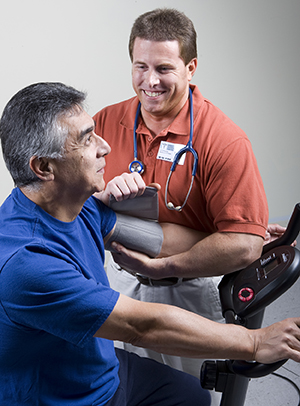
Aerobic exercise helps your heart and other muscles better use oxygen. Many cardiac rehab programs use walking on a treadmill as a basic form of aerobic exercise. Some programs also use equipment, such as stationary bikes, recumbent cross-trainers that are low impact on joints, arm cranks, and light weights. You will be shown how to use them to get the most benefit. In most programs, your heart rate and blood pressure will be monitored while you exercise.
When to call your health care provider
Stop exercising and call your provider if you:
-
Have extreme fatigue (especially after exercise).
-
Feel lightheaded, dizzy, or nauseated.
Call 911
Call
-
Have chest pain or discomfort.
-
Feel burning, tightness, heaviness, or pressure in your chest.
-
Have unusual aching in your arm, shoulders, neck, jaw, or back.
-
Feel your heartbeat racing or skipping.
-
Have unusual shortness of breath or trouble breathing.
-
Faint.
Online Medical Reviewer: Stacey Wojcik MBA BSN RN
Online Medical Reviewer: Steven Kang MD
Date Last Reviewed: 03/01/2025
© 2000-2026 The StayWell Company, LLC. All rights reserved. This information is not intended as a substitute for professional medical care. Always follow your healthcare professional's instructions.


