When you have chronic lung disease, exercise is an important part of your treatment. With chronic lung disease, you'll need to take extra care to stay safe during exercise. You may wonder how you can exercise without becoming short of breath. The answer is, you can’t. But this isn’t necessarily bad. Shortness of breath is a sign that you’re pushing yourself. And pushing yourself now means you’ll be able to do more in the future. The information below will help you get started safely.
Step 1. Get an evaluation
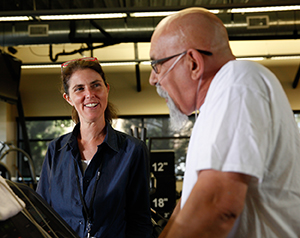
First, you will need to see your healthcare provider. You need to be evaluated before you can start exercising. Your healthcare provider will assess your lungs, heart, and blood pressure. They will gauge your need for supplemental oxygen. You will be checked for other cardiovascular problems. You may also have an exercise test. This is to check if exercise is safe for you. It will help your healthcare provider see what limits you should have on exercise. And it will help your provider make exercise recommendations for you.
Step 2. Talk about your exercise plan
You and your healthcare provider will set up a safe exercise plan that meets your needs. Ask about types of exercises you can try. Also, ask how often to exercise and how long each session should last. Your healthcare provider may tell you to use a fast-acting bronchodilator before each exercise session. They may also tell you to use oxygen during exercise. Follow all your healthcare provider's instructions.
Step 3. Choose your activity
Think about the activities you discussed with your healthcare provider. Choose the ones that appeal to you. You’re more likely to keep exercising if you’re enjoying it. Your choices may include:
-
Chair exercises, such as moving your arms and legs while sitting. These may be good if you’re too short of breath to do other types of exercise.
-
Lifting light hand weights or water bottles to build upper body strength.
-
Walking. This is a good way to get oxygen moving through your body. You can walk outdoors or indoors, such as around the house or at a shopping mall.
-
Swimming, water aerobics, or using a stationary bike or treadmill.
Step 4. Get moving
Exercise is most effective when it’s done at least
-
Make exercise a regular part of your routine. You may enjoy exercising with friends.
-
Use a watch to keep track of how long you exercise each day. Record your progress in a notebook.
-
Increase your endurance slowly. For instance, add 1 minute to your exercise time each week.
-
Once you’ve reached your goal, maintain it by varying your activities.
-
On days you don’t feel as well, break your exercise into several shorter periods. For instance, instead of walking for 30 minutes, you can take 3 10-minute walks.
Step 5. Do more over time
Work toward a goal of 30 to 60 minutes of exercise, most days of the week. Here are some ways to reach that goal:
-
Make exercise part of what you do each day. Go to the exercise sessions at your pulmonary rehab program.
-
Keep exercise interesting by doing things you find enjoyable.
-
Wear a watch and keep a diary to track your progress. Set small goals to challenge yourself.
-
Increase your workout by a little bit each week, until you’ve reached your goal.
-
Once your workouts have reached their goal length, increase how hard you work out. For example, walk up a gentle slope instead of on flat ground.
Author: Wheeler, Brooke
Online Medical Reviewer: Chris Southard RN
Online Medical Reviewer: Rajadurai Samnishanth Researcher
Online Medical Reviewer: Rita Sather RN
Date Last Reviewed: 10/01/2024
© 2000-2026 The StayWell Company, LLC. All rights reserved. This information is not intended as a substitute for professional medical care. Always follow your healthcare professional's instructions.


