Getting around at home
When you’re ready, you may progress from a walker to crutches or a cane. Check with your surgeon or physical therapist before you stop using your walker or any other walking aid.
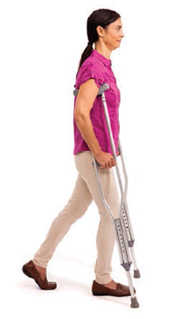
Using crutches
-
With crutches in place, lean on your hands, not your armpits. The top of the crutches should be 1 to 2 inches below your armpits to prevent damage to blood vessels and nerves.
-
You may also have forearm type crutches advised.
-
Move your operated leg and crutches forward at the same time. Keep the operated leg lined up with the crutches.
-
Look straight ahead, and step through the crutches with your good leg.
-
To turn, take small steps. Don’t twist.
Walking up stairs
-
Hold the rail with 1 hand and both crutches in the other. Support your weight evenly between the rail and the crutches.
-
With the crutches and operated leg on the lower step, step up with your other leg.
-
Keeping a grip on the rail, bring your operated leg and crutches up to the same step.
Walking down stairs
-
Hold the rail with 1 hand and both crutches in the other.
-
With your weight on your good leg, step down with your operated leg and crutches.
-
Using the crutches and rail for balance, slowly bring your good leg down to the same step.
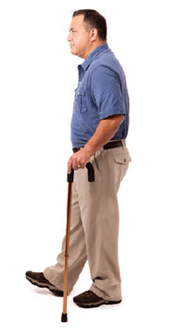
Using a cane
-
Your physical therapist will help you choose the right cane: standard (straight or C) cane, offset cane, quad cane (with 4 prongs), or functional grip cane.
-
Hold the cane in the hand opposite the hip replacement unless told otherwise.
-
Put all your weight on your good leg. Find your balance. Move the cane and your operated leg forward.
-
Support your weight on both the cane and operated leg. Then step through with your good leg, putting all your weight on your foot. Then start the next step.
-
Walk up and down stairs using the same method as using crutches in 1 hand as explained above.
Easing into activity
As you get stronger, slowly increase the amount of activity you do around your home. Start by getting your own glass of water and doing household chores like dusting. Soon you’ll be able to move on to advanced activities, such as using the stairs.
Online Medical Reviewer: Rajadurai Samnishanth Researcher
Online Medical Reviewer: Rita Sather RN
Online Medical Reviewer: Trina Bellendir PT
Date Last Reviewed: 10/01/2024
© 2000-2026 The StayWell Company, LLC. All rights reserved. This information is not intended as a substitute for professional medical care. Always follow your healthcare professional's instructions.


