High blood pressure that isn't controlled can damage the walls of the blood vessels in your body, including those in the kidneys. If that happens, the kidneys' tiny filtration units (nephrons) become damaged. They are less able to filter your blood and waste products in the blood. Lowering high blood pressure can reduce the amount of damage to your kidneys. It can help slow any progression of kidney disease. High blood pressure is the second-leading cause of kidney failure in the U.S.
Understanding blood pressure readings
The top number (systolic pressure) is the blood pressure when your heart is beating and pumping blood. The bottom number (diastolic pressure) is the blood pressure when your heart is relaxing and refilling with blood. A normal blood pressure is less than 120/80. In chronic kidney disease (CKD), the blood pressure goal is less than 130/80.
Check your blood pressure often
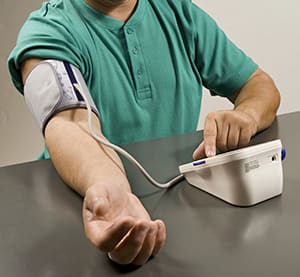
Checking your blood pressure is a simple test that you can do at home. Most pharmacies have in-store monitors and home blood pressure monitors. For best results, keep the hints below in mind.
- Always take your blood pressure at the same time of the day. Morning may be best.
- Sit quietly for at least 5 minutes before measuring so that you feel relaxed. Don't talk. Don't smoke, have caffeine drinks, or exercise for 30 minutes before measuring. Empty your bladder before sitting down.
- Sit with your back straight and supported (on a dining chair, rather than a sofa). Don't cross your legs. Keep your feet flat on the floor. Your arm should be supported on a flat surface (such as a table) with the upper arm at heart level. If you're using an arm cuff, the bottom of the cuff should be directly above the bend of the elbow. Ask your health care provider to show you.
- Take the readings at the same time, such as morning and evening. Take the readings daily, especially after a change in treatment and during the week before your next appointment.
- Take multiple readings 1 minute apart. Each time you measure, take 2 or 3 readings.
- Record the results. Take your records with you to your appointments.
- Use the cuff on your bare arm.
- Place the cuff so it fits snugly on your upper arm. Some monitors are placed on the wrist.
- Follow all the instructions that come with your kit.
- Take your record and kit with you to doctor visits. Ask your provider to check your blood pressure using your kit. Compare your readings with your provider's reading.
Take medicine as directed
Blood pressure medicines often play a large role in treatment. Your medicine will work best if it's taken as directed. Be sure to:
- Take your medicine at the same time each day.
- Find out if it should be taken with food.
- Call your doctor if you think the medicine is making you dizzy or sick to your stomach.
- Don't skip doses.
- Don't stop taking your medicine unless your doctor tells you to. Doing so may be harmful.
- Get regular urine and blood tests at least annually to watch for kidney disease or monitor existing kidney disease.
Addressing other risk factors for kidney disease
Many other factors can also contribute to kidney disease. Smoking, diabetes, dietary habits, lack of exercise, obesity, and other factors can contribute. If you have any of these risk factors, ask your doctor for resources that can help you manage these issues and improve your health.
Online Medical Reviewer: Raymond Kent Turley BSN MSN RN
Online Medical Reviewer: Rita Sather RN
Online Medical Reviewer: Walead Latif MD
Date Last Reviewed: 09/01/2025
© 2000-2026 The StayWell Company, LLC. All rights reserved. This information is not intended as a substitute for professional medical care. Always follow your healthcare professional's instructions.


